I concluded by my friend Jose Alambrito to designate the applications of qi gong to better understand the art of clowning.
Many of the dynamics of qi gong have two very different parts: One Yang of opening and bodily exposure outside and another complementary Yin of the body and entry inside.
This to me represents the natural movements and exchanges that are produced during the theatrical play by the clown. The movement was about expression and education of the public and the movement was about internal education and assimilation of what was happening. It defines the famous Ping-Pong of the world of masks, which the clown is best represented as the smallest mask.
On the other hand, this ping-pong movement literally brought me up to the concept of Contact-Retirement so famous in the gestáltic world. I was out of contact with the public and I was withdrawn from feeling and I was in contact with myself and I was withdrawn from the public.
And keeping in mind that this is basically the scenic game that plays the clown, this clown is a tool that must be practiced to understand this process of oscillation of attention between the Inner-Yin and the Outer-Yang.
Likewise, as one of the ancestral meditative practices, we are preparing our bodies to allow us to gradually enter into our vulnerable head. Opening the way to the clown game and life.
Coming from the ancient practice of qi gong using the sound, the vibration corresponding to each element. In the Clown Seminars to be we use this ancient art to activate emotions, organs, meridians and bodily zones, which prepare us for the attitude of mental openness, emotional vulnerability and instinctive availability typical of the Clown:
– Shhhhhhh: Trabaja la vibración del Pulmón y el I. Grueso, órganos del Elemento Metalo. The emotion associated with sadness. We can use it to improve our self-esteem and confidence in our intuition.
– Jaaaaaaaaah: Trabaja the vibration of the Heart and the Deep Intestine, organs of the Fire Element. The associated emotion is happiness. We can use it to regulate internal fire, which on occasions causes internal anxiety or discomfort.
– Shi: Trabaja the vibration of the Higado and the Vesícula bile, organs that configure the Madera Element. The emotion in anger and frustration. We can use it to give ourselves fire, increase our clarity by setting limits, allow us to flow like the wind and drain our internal frustration and anger.
– Juuuuu: Trabaja the vibration of the Bazo and the stomach, which configure the organs of the Earth Element. The associated emotion is mental confusion or mental confusion. We can use it to improve digestive problems, clarify the mind and facilitate the flow of logical and clear thinking.
– Chuei: Trabaja the vibration of the Riñon and the Vejiga, which configure the Water Element. The associated emotion is the heart. We can use it to implement our confidence in life and develop our own heart.
– Jiiii (between soft J and S): Trabaja the vibration of the San Jiao or Triple Calentador and the Pericardium. Both are associated with the regulation of the external (external pathogenic factors) and the internal (internal pathogenic emotions).
THE SONG OF ARMÓNICOS
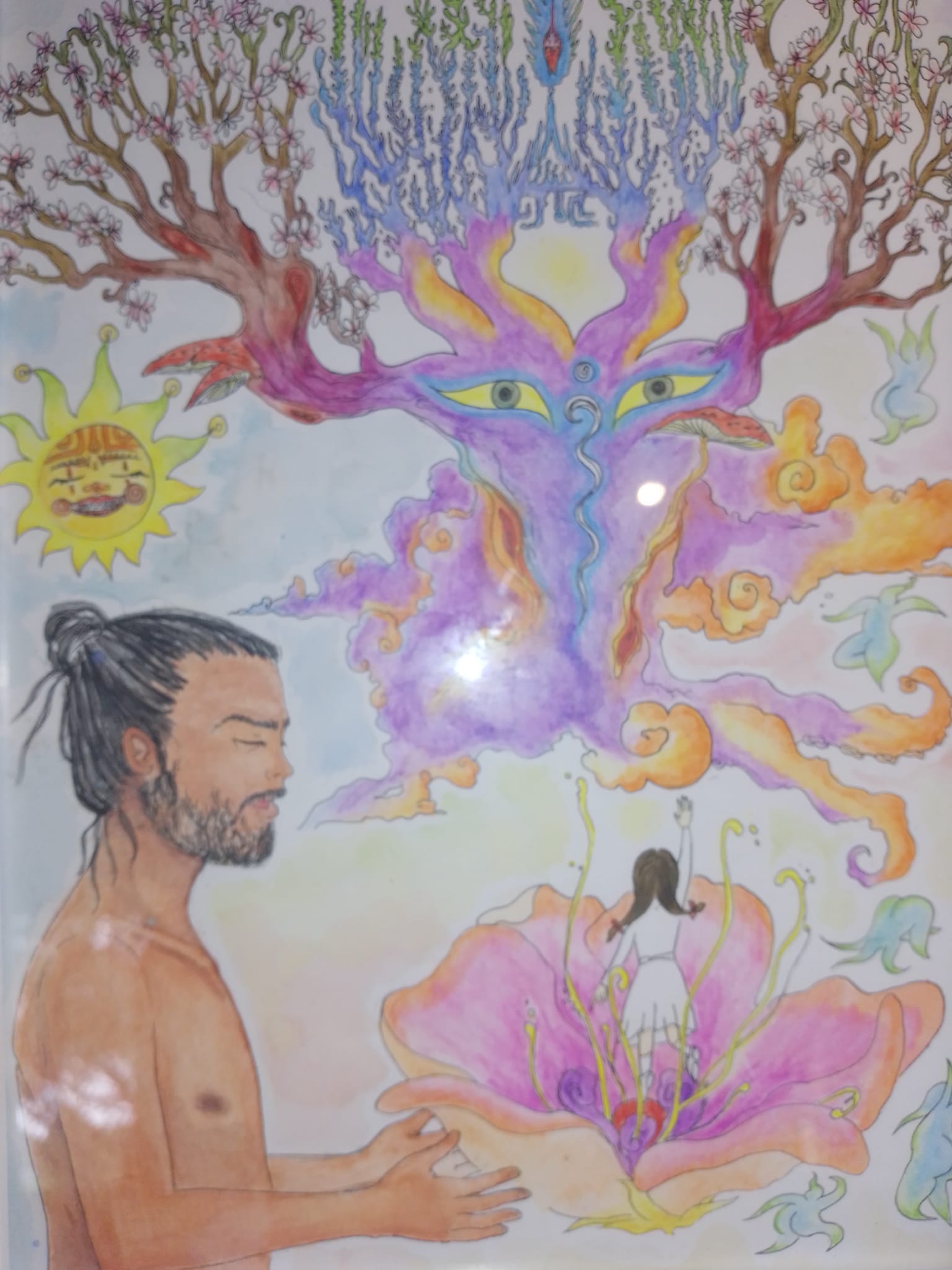
The qiclown of the sounds
It is another of the techniques that we use in our Clown Seminars for Ser. We are thrilled to use this ancestral song that helps to induce states of relaxation, meditation and connection with us messages, to facilitate access to the internal regions of our Ser.
What is it about? What effects do they have?
Recognized from the page of Diafanum.com
It is a vocal technique where you can emit two or more sounds simultaneously.
If you sing a fundamental note accompanied by one or more notes that resonate with it, like flautas above the fundamental voice, modulate it into the mouth and beak resonators, its harmonics.
The harmonics are the elements that give each note and each sound its timbre and color, the beauty of the music or song depends on them. With this technique you can make audible sounds, independent of each other, giving rise to a melody of striking beauty.
Originating from Mongolia, it was the song of the chamanes who in their tradition worshiped with the spirit of nature.
Practicing harmonic singing is much more than learning a technique.
It is the expression of the soul through the voice, which touches the heart, bringing it to the appreciation and joy of living.
The resonance, beauty and vibration of the harmonics, both when singing them and playing them, produces a purification.